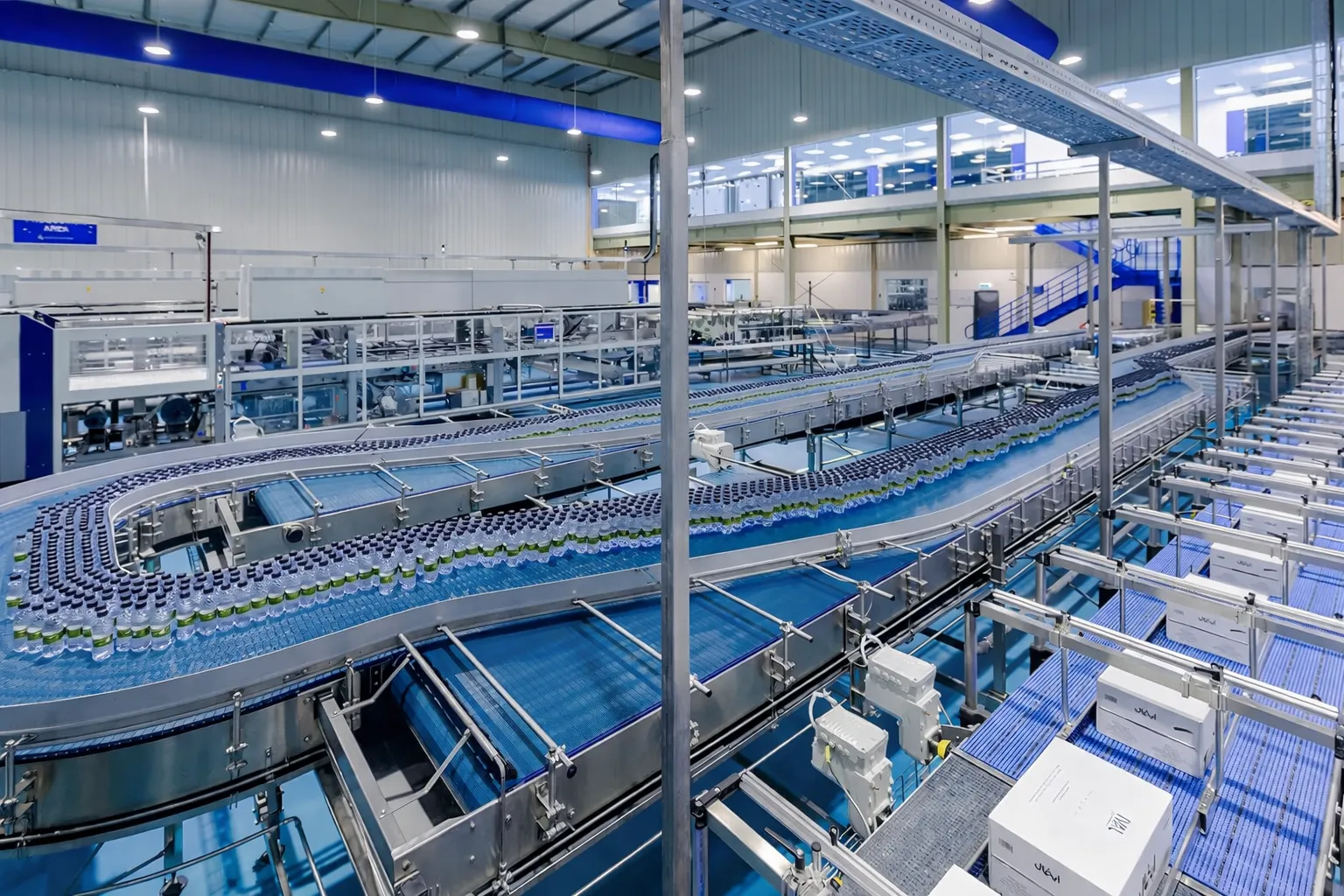
Entering the mineral water industry requires a clear understanding of the financial commitment and operational complexities involved. In 2026, with advanced filtration technologies and automated systems, the landscape has become more efficient but also more competitive. This guide breaks down the essential components of setup cost, production process, and profitability.
1. Estimated Setup Cost (2026)
The total investment for a mineral water plant can vary significantly based on capacity and automation levels. Here’s a rough breakdown for a standard 2000 BPH (Bottles Per Hour) plant:
- Machinery & Equipment: ₹15 Lakhs to ₹35 Lakhs (depending on speed and grade of SS).
- Land & Civil Works: ₹10 Lakhs to ₹50 Lakhs (location dependent).
- Utilities (Power, Water, Boiler): ₹5 Lakhs to ₹10 Lakhs.
- Licensing & Documentation: ₹2 Lakhs to ₹5 Lakhs (ISI, FSSAI, PCB).
- Initial Working Capital: ₹5 Lakhs to ₹10 Lakhs.
Total Initial Investment: Approximately ₹40 Lakhs to ₹1.1 Crore for a medium-scale setup.
2. The Technical Production Process
A modern plant follows a rigorous purification and packaging sequence to ensure safety and compliance:
- Raw Water Storage: Collecting water from the source in large tanks.
- Multi-Grade Filtration: Removing suspended solids and turbidity.
- Activated Carbon Filtration: Eliminating color, odor, and chlorine.
- Reverse Osmosis (RO): Reducing TDS (Total Dissolved Solids) and removing contaminants.
- UV & Ozone Treatment: Ensuring 100% microbiological safety.
- Automatic Filling & Capping: High-speed hygienic bottling in a clean-room environment.
- Labeling & Packaging: Applying batch codes and shrink-wrapping for distribution.
3. Profitability and ROI
The profit margins in the mineral water business typically range from 15% to 25%. Key factors influencing profitability include:
- Direct Costs: Raw materials (preforms, caps, labels), electricity, and labor.
- Distribution Efficiency: Optimizing logistics to reduce transport costs.
- Brand Positioning: Premium branding can command higher retail prices.
With a well-managed distribution network, most plants achieve a Return on Investment (ROI) within 18 to 36 months.
4. Future Trends in 2026
Stay ahead of the curve by adopting sustainable practices like energy-recovery RO systems and lightweight bottle designs. Digital monitoring of TDS levels and production output via mobile apps is becoming the standard for modern entrepreneurs.
Ready to start your journey? Krupashindu provides end-to-end consultancy and Turnkey Machinery Setup to ensure your business is profitable from day one. Be sure to avoid the Top 7 Startup Mistakes mentioned in our previous guide.
Related Reading
The Future of Mineral Water Plants in 2026: Trends & Tech