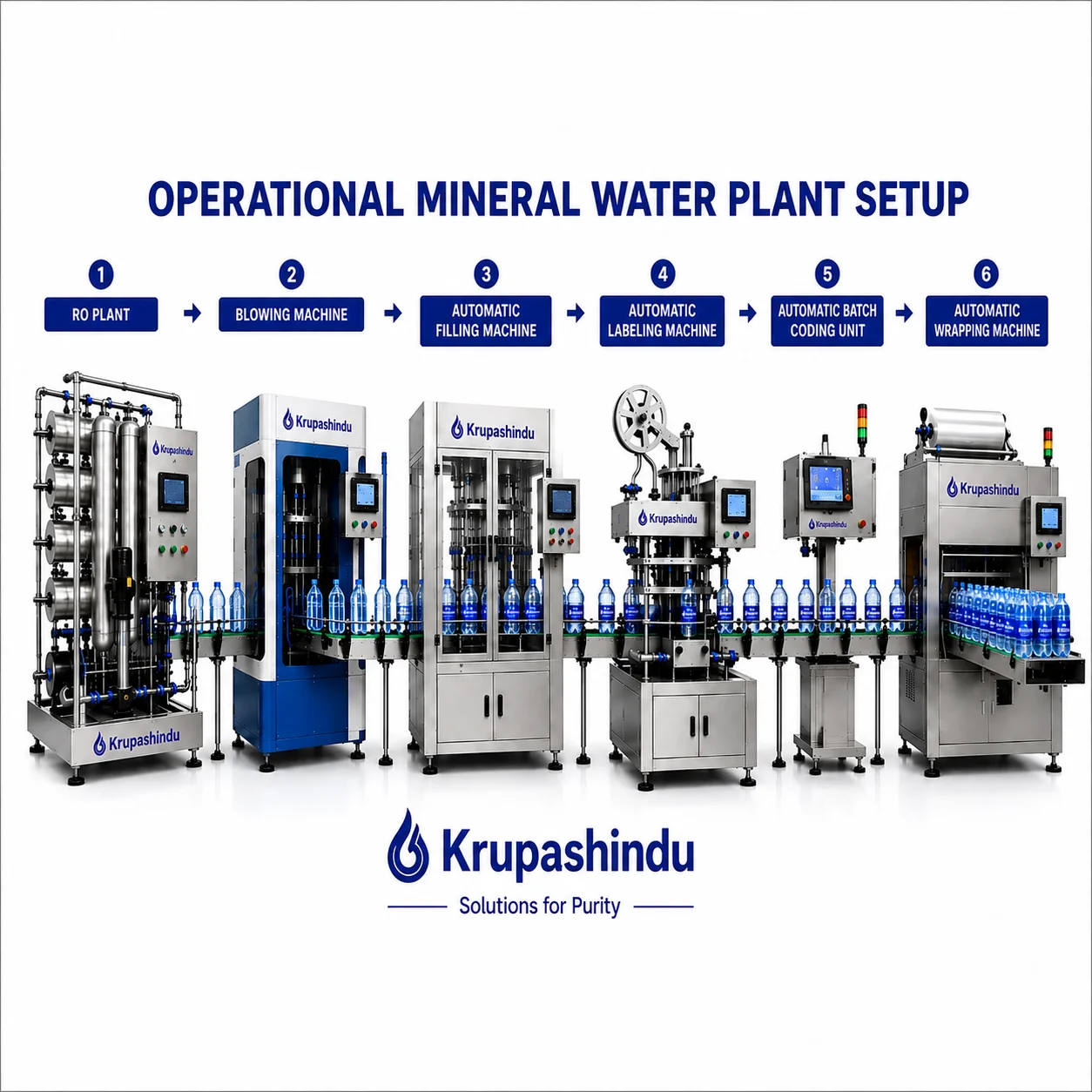
Setting up a commercial water processing plant is a highly technical endeavor that requires meticulous planning and a deep understanding of fluid dynamics, chemistry, and automation. Whether you are producing packaged drinking water or supplying purified water for pharmaceutical manufacturing, the core principles of an effective processing plant remain consistent.
1. The Multi-Stage Purification Framework
A standard single-filter setup is never sufficient for commercial applications. A modern water processing plant relies on a multi-barrier approach to ensure uncompromising purity:
- Pre-Filtration: Raw water passes through Multimedia Sand Filters to remove suspended solids, dust, and turbidity.
- Adsorption: Activated Carbon Filters are deployed to eliminate chlorine, pesticides, bad odors, and organic compounds.
- Conditioning: Anti-scalant dosing or water softening is utilized to protect downstream fine-filtration membranes.
- Core Purification: Industrial Reverse Osmosis (RO) membranes strip away heavy metals, dissolved salts, and pathogens at the molecular level.
- Final Disinfection: UV Sterilization and Ozonation act as the final safeguards, neutralizing any remaining bacteria or viruses before bottling.
2. Automation and SCADA Integration
The days of manually turning valves are over. Today’s state-of-the-art facilities rely on Programmable Logic Controllers (PLCs) and SCADA (Supervisory Control and Data Acquisition) systems. These technologies provide real-time monitoring of crucial parameters like flow rates, TDS (Total Dissolved Solids), and pH levels. Automated CIP (Clean-in-Place) systems ensure that the plant maintains hygienic conditions with minimal human intervention.
3. Hygienic Storage and Distribution
Once water is purified, it must be stored in specialized SS 316L grade stainless steel tanks to prevent secondary contamination. The distribution loop must be designed with zero 'dead legs'—areas where water can stagnate and breed bacteria. Continuous circulation and periodic ozone dosing within the storage tanks maintain the water's biological stability.
4. The Importance of a Turnkey Partner
Sourcing your RO system from one vendor, your storage tanks from another, and your filling machines from a third is a recipe for integration disaster. Partnering with a comprehensive turnkey manufacturer ensures that every component is engineered to work together flawlessly. It guarantees uniform software integration and provides a single point of accountability for the entire plant's performance.
At Krupashindu, we specialize in designing and deploying end-to-end water processing plant solutions that are efficient, compliant, and ready to scale. If you are planning a new venture or upgrading an existing facility, contact our engineering experts to map out your project.